Wall shelves have become essential for modern living rooms, they’re not just storage, they’re a design statement. Whether you’re working with a cozy apartment or a sprawling family room, the right wall shelf ideas can transform empty walls into functional art displays while freeing up floor space. With styles ranging from sleek floating shelves to rustic wood and industrial metal, homeowners today can choose living room wall shelves that match their decor, budget, and DIY skill level. This guide covers nine practical solutions that’ll help you maximize vertical space while keeping your living room organized and visually appealing.
Table of Contents
ToggleKey Takeaways
- Wall shelf ideas for living rooms transform empty vertical space into functional storage and design statements, ranging from floating shelves to industrial metal units.
- Floating shelves require mounting into wall studs spaced 16 inches apart and can safely support 30–40 pounds when properly installed with heavy-duty brackets.
- Wooden shelves add warmth and character to living rooms; use proper shelf brackets rated for 20–50 pounds depending on wood type and finish with sealant to prevent splinters.
- Corner wall shelves maximize unused corner space and work especially well for displaying collections or creating reading nooks, with anchoring simplicity when studs exist on both walls.
- Asymmetrical and tiered shelf arrangements create visual interest and guide the eye across walls while enabling thoughtful curation of books, plants, and decor items.
- Successful DIY shelf installation requires locating studs with a stud finder, using correct fasteners, checking level alignment, and proper wall preparation to avoid sagging or failure.
Floating Shelves for a Modern, Minimalist Look
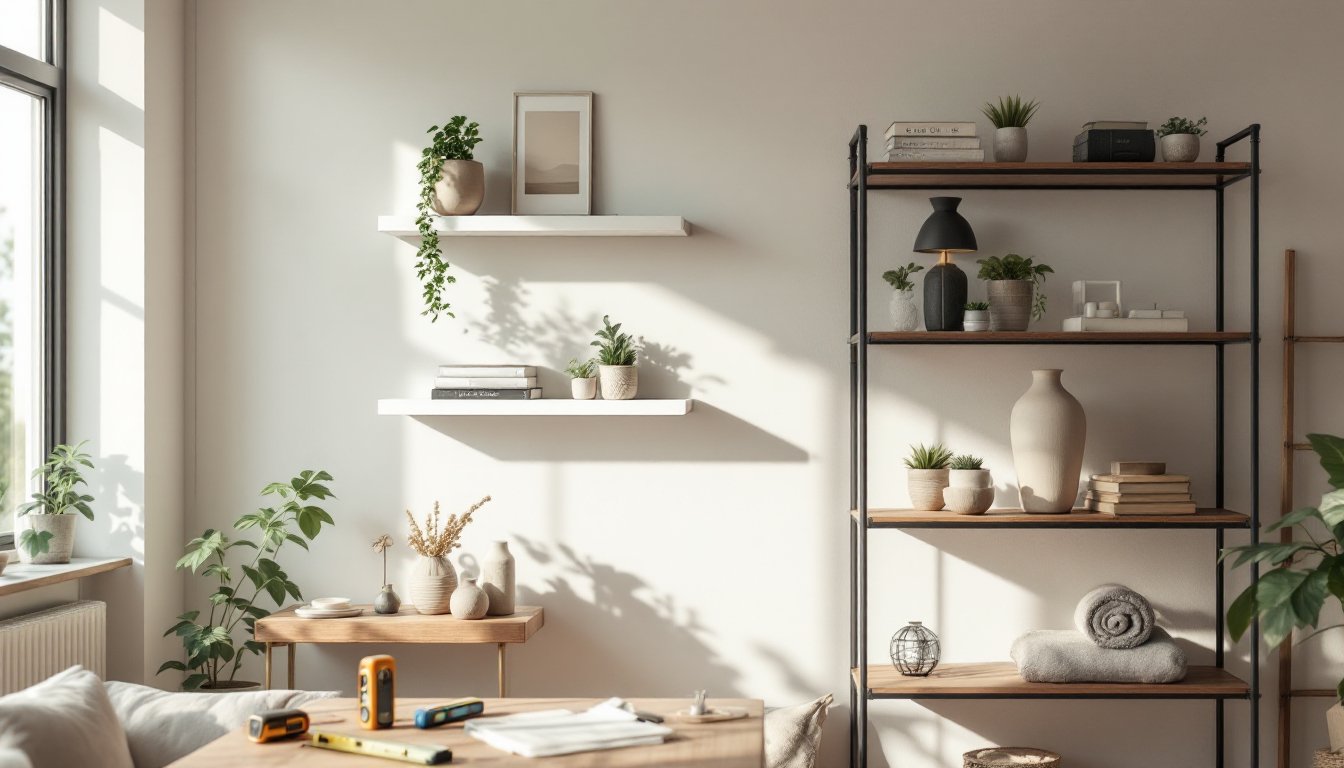
Floating shelves are the go-to choice for contemporary living rooms because they’re clean, uncluttered, and appear to defy gravity. Unlike traditional bracket-supported shelves, floating shelves use internal steel supports anchored directly into wall studs, creating an illusion of weightlessness.
These shelves work best for homes with drywall over solid framing. You’ll need to locate studs using a stud finder, most studs are spaced 16 inches apart in standard construction. Mount heavy-duty brackets into the studs themselves: avoid hanging shelves between studs on drywall alone, as they’ll sag under load.
Floating shelves shine when styled with a few statement pieces: a plant in a ceramic pot, a stack of design books, or a small framed photo. The key is restraint, overcrowding defeats the minimalist aesthetic. Most floating shelves max out at 30–40 pounds of distributed weight, depending on shelf thickness and bracket quality. Always verify the manufacturer’s weight limits before loading your shelf with heavy items.
Wooden Shelving for Warmth and Rustic Charm
Wooden shelves add natural warmth to any living room and work beautifully alongside both traditional and contemporary decor. Solid wood options, like walnut, oak, or reclaimed lumber, develop character over time, while engineered wood or plywood veneered in attractive finishes offers budget-friendly durability.
When choosing wood, pay attention to grain direction and finish. A matte stain or natural oil finish feels more authentic than glossy lacquer on rustic-style shelves. Reclaimed wood shelves have become popular, though genuine reclaimed material carries a premium price: salvaged-look new wood offers similar aesthetics at lower cost.
Mounting wooden shelves requires proper bracketing. Use shelf brackets rated for the expected load, a typical 36-inch wooden shelf can safely hold 20–50 pounds, depending on wood type and bracket strength. Pre-drill mounting holes to prevent wood splitting, especially near shelf edges. Sand and seal cut edges to prevent splinters and moisture absorption, particularly if your living room has fluctuating humidity.
Corner Wall Shelves to Maximize Unused Space
Corner spaces in living rooms often go unused, but they’re prime real estate for corner shelves. A corner shelf unit can anchor a room’s layout and eliminate that awkward empty-corner feeling while adding functional storage.
Corner shelves come in two main styles: single shelves (one shelf in the corner) and corner shelf units (tiered or multi-level designs). Single shelves are easier to install but offer minimal storage, while tiered units maximize vertical space. Because corners typically have wall studs on both sides, anchoring corner shelves is straightforward, mount brackets into studs on each wall for maximum stability.
Styleing corner shelves requires balance. Place taller items (like a table lamp or tall vase) toward the back and smaller decor pieces toward the front. Corner shelves work especially well for displaying collections, plants, or creating a small reading nook. A floating corner shelf with good lighting above or below can dramatically improve a room’s ambiance while keeping clutter off the floor.
Industrial Metal and Glass Shelving Units
Industrial shelving blends exposed metal piping with glass or wood shelves, creating a bold, modern aesthetic. This style works particularly well in open-concept living rooms and suits both urban lofts and transitional decor schemes.
Metal pipe shelving is durable and can handle heavier loads than floating shelves, often supporting 50–100+ pounds per shelf. The industrial look comes from visible black iron or steel pipes that form the frame. Glass shelves add sophistication, while wood shelves introduce warmth.
Before committing to DIY metal pipe installation, understand that proper anchoring requires drilling into studs and using flange fittings rated for load-bearing. Ensure all connections are tight and level: a slightly off shelf will be visually obvious, especially with glass. Recent home decor inspiration from interior design platforms shows industrial shelving pairs well with vintage metal accents, potted plants, and minimal decor. If metal piping feels complex, several retailers sell pre-assembled industrial shelf kits that simplify installation while maintaining the aesthetic.
Tiered and Asymmetrical Shelf Arrangements
Instead of installing uniform, parallel shelves, consider a tiered or asymmetrical arrangement for visual interest. These designs break up wall space dynamically and create zones for different types of decor or storage.
Asymmetrical arrangements typically feature shelves at varied heights, for example, one shelf at 48 inches, the next at 60 inches, and another at 54 inches. This staggered approach feels intentional rather than cramped and works beautifully for displaying books, art, plants, and collected items. Tiered shelves, which step upward or downward like stairs, guide the eye across your wall and create rhythm.
When designing asymmetrical layouts, sketch a rough diagram first and hold cardboard cutouts at proposed heights before drilling. This prevents mounting errors. Design-focused websites often showcase asymmetrical shelving ideas for small space living, proving these arrangements maximize visual impact without overwhelming tight quarters. Asymmetrical designs also invite creativity in styling, each shelf becomes its own display stage, encouraging you to curate thoughtfully rather than crowd shelves uniformly.
DIY Installation Tips and Best Practices
Proper installation makes the difference between a shelf that lasts decades and one that sags or falls. Start with these non-negotiables:
Locate Studs and Mark Drill Points. Use a digital stud finder to locate wall studs, then mark their centers with a pencil. Mark mounting hole locations on the wall with a level: use shims or spacers if your wall isn’t perfectly plumb. For shelves wider than 24 inches, mount brackets into at least two studs.
Prep Your Wall. Fill any holes or damage with spackling compound, sand smooth, and prime before painting. A smooth, clean surface ensures brackets sit flush against the wall. If mounting on tile or plaster, use anchors rated for those materials, standard drywall anchors won’t hold.
Use Correct Fasteners. Studs require ¼-inch wood screws (2–3 inches long), while drywall-only anchors come in toggle, molly, and plastic varieties. Always verify bolt or screw capacity matches your shelf’s expected load.
Check Level and Alignment. Install a 24-inch spirit level on each shelf before securing it fully. Uneven shelves look cheap and invite items to slide. Measure distances from the floor or wall edge to ensure consistent spacing if installing multiple shelves.
Wear Appropriate PPE. Safety glasses protect eyes from dust and flying debris, work gloves prevent splinters, and a dust mask keeps fine particles out of your lungs during drilling. If your walls contain asbestos (common in homes built before 1980), consult a professional rather than drilling.
Measure twice, drill once. Most DIY shelf failures happen because installers skipped proper stud location or leveling. Living room design guidance from specialists consistently emphasizes that careful preparation prevents costly mistakes.
Conclusion
Wall shelves transform living rooms from empty vertical space into purposeful design elements. Whether you choose minimalist floating shelves, warm wooden options, or bold industrial setups, the key is matching your choice to your room’s style and your DIY comfort level. Start with proper stud location, solid brackets, and a level, these fundamentals apply to every installation. Your living room will thank you with functional storage and visual appeal that’ll last for years.