Yellow is one of those colors that can either make a room sing or fall completely flat. Get it right, and you’ve got a living room that feels warm, inviting, and genuinely livable. Get it wrong, and you’re staring at walls that feel like a school hallway. The good news? Yellow works brilliantly in living rooms when you understand the fundamentals, choosing the right shade, balancing it with complementary colors, and knowing where to anchor it for maximum impact. Whether you’re painting walls, accessorizing with furniture, or building a modern yellow living room from the ground up, this guide walks you through seven practical approaches that actually work in real homes.
Table of Contents
ToggleKey Takeaways
- Yellow living room ideas work best when you choose the right shade—pale butter tones feel soft and airy, while bold mustard creates a modern statement wall with lasting impact.
- Understanding undertone is critical: soft creamy yellows feel comforting, bright lemon yellows have modern punch, and muted golden yellows feel sophisticated—always test a 2-by-3-foot patch at different times of day before committing.
- Balance yellow walls with at least 60% neutral tones in soft furnishings, trim, and white or soft-gray ceilings to prevent the room from feeling cramped or claustrophobic.
- Yellow furniture and textiles are a lower-commitment way to test the color; start with throw pillows in varying textures and layer pale and deeper yellows with neutral accents (cream, taupe, gray) for depth.
- Add one accent color in small doses—navy, forest green, or burnt orange—through books, prints, or a single pillow to show intentional design choices without overwhelming the space.
Why Yellow Works In Living Rooms
Yellow hits differently in a living space than in a kitchen or bedroom. It’s the color of natural sunlight, so it naturally brightens even north-facing rooms without feeling artificial. The psychology is straightforward: yellow promotes optimism and energy without the overstimulation of red or orange. A well-placed yellow living room design also creates intimacy, it draws people together and encourages conversation, making it ideal for the space where families actually spend time.
The key is understanding undertone. A soft, creamy yellow with warm undertones feels comforting and classic. A bright, acidic lemon yellow has modern punch. A muted, buttery golden yellow lands somewhere grounded and sophisticated. Before committing to any shade, paint a 2-by-3-foot test patch on your wall and observe it at different times of day, morning light, afternoon, and evening, because yellow shifts dramatically depending on the light source in your room.
Pale Yellow Walls For A Soft, Airy Feel
Pale yellow is the gateway drug to yellow living rooms. It’s forgiving, flexible, and works with almost any existing furniture or accent color you already own. Think cream-yellow or butter-white blends, colors that read as “almost white” in soft light but reveal their yellow warmth when sunlight hits the walls. This approach is perfect if you’re hesitant about committing to a stronger color.
For pale yellow walls, standard interior latex paint in an eggshell or satin finish works best, eggshell gives a subtle sheen that hides minor imperfections, while satin is slightly more durable and easier to touch up. Plan on one gallon per 350–400 square feet, but buy 1.5 times what your math says you need: running short mid-project is maddening. Prep is non-negotiable: patch holes, sand glossy surfaces lightly with 120-grit paper, prime any bare drywall or stains with a quality primer (stains bleed through, and pale yellow shows everything), and tape baseboards and trim cleanly with painter’s tape pressed firmly along the edge.
Two coats are standard for pale yellow, it’s less forgiving than neutrals, so don’t skimp. Pale yellow pairs beautifully with interior design tips from MyDomaine, where you’ll find styling strategies that complement soft, airy walls without competition.
Bold Mustard Yellow As A Statement Wall
If pale feels timid, mustard yellow commands attention. Deep, saturated mustard (often called ochre or golden yellow in paint chips) is trending in modern interiors because it works with contemporary, transitional, and even traditional styles. A single mustard accent wall creates a focal point without overwhelming the room, paint the wall behind your sofa, the wall with the fireplace, or even just the wall between windows.
Mustard requires the same prep as pale yellow, but it’s less forgiving of uneven application. Use a quality roller (a 3/8-inch nap works best for most drywall) and cut in edges with a angled brush 2–3 inches wide. Expect three coats on darker yellows, the first and second seal the base, and the third delivers true color and coverage. A primer tinted to your final color helps tremendously with dark shades and reduces the number of topcoats needed.
Balance a bold mustard statement wall by keeping adjacent walls soft and neutral, white, light gray, or warm beige. The contrast prevents the room from feeling cramped. Darker woods and deep jewel-tone accents (emerald, navy, burgundy) complement mustard beautifully without competing. House Beautiful’s paint color guides offer inspiration for pairing mustard walls with grounding, sophisticated accents.
Yellow Accents Through Furniture And Textiles
Not ready to paint? Yellow furniture and textiles give you flexibility to test-drive the color and adjust or remove it without patching drywall. This is the faster, lower-commitment route, and honestly, the most forgiving for renters or anyone who changes their mind seasonally.
Choosing The Right Furniture Pieces
A yellow sofa or armchair anchors the room and becomes the visual centerpiece. Upholstered pieces in solid yellow work best in lighter, creamier tones, they’re more versatile and forgiving than bright yellows, which can feel juvenile if the fabric quality is cheap. If you’re investing in a sofa, check the fabric durability: a tight weave (150,000+ double rubs on the Wyzenbeek test) holds up to real living better than looser weaves.
Yellow accent chairs, ottomans, or a console table are lower-stakes alternatives. They add color without dominating the space. A yellow side table or credenza works especially well if the base is wood or metal in a contrasting finish, it keeps the piece from feeling too flat or precious.
Layering With Throw Pillows And Blankets
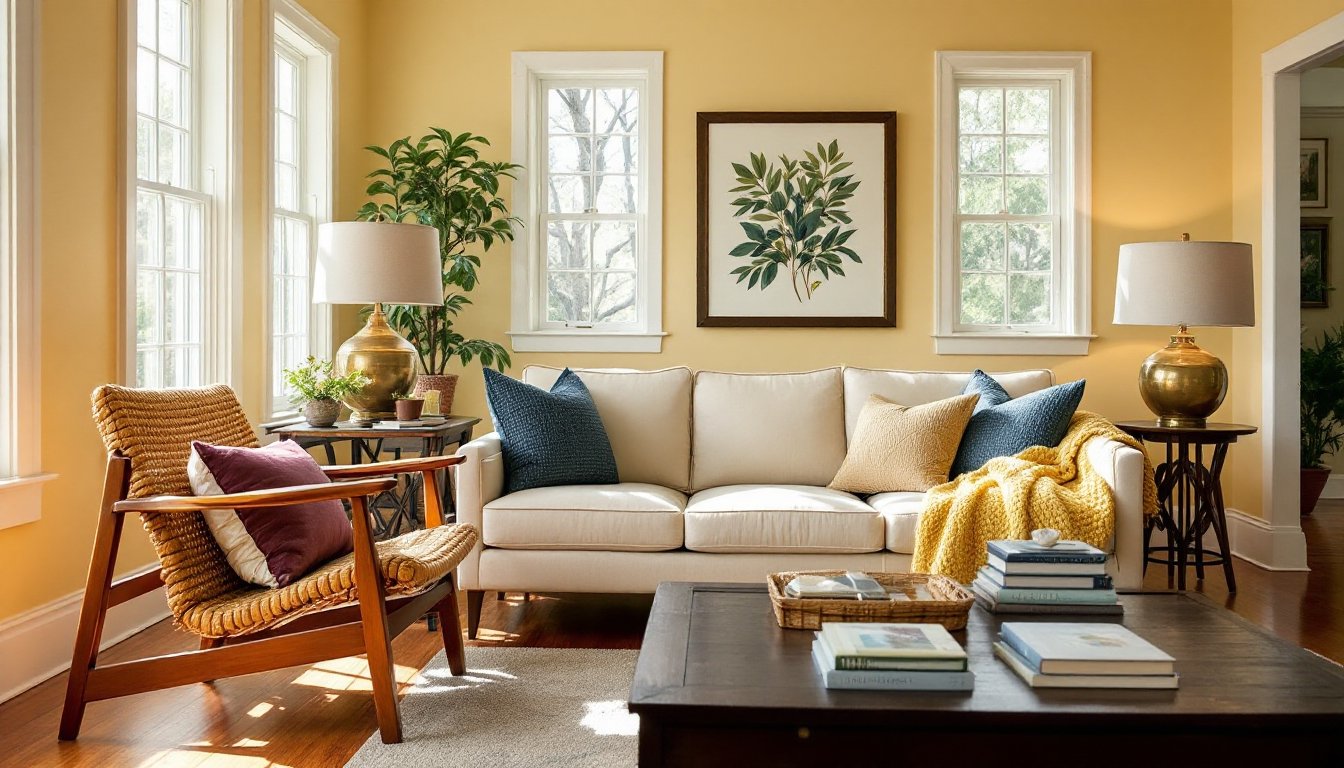
Throw pillows are the secret weapon for testing yellow without commitment. Start with two to four pillows in varying textures, linen, velvet, woven wool, and mix pale and deeper yellows for depth. Pair them with neutrals (cream, taupe, gray) and one accent color (navy, forest green, rust) to prevent a monochromatic flatness that reads as amateur.
Yellow blankets draped over the arm of a sofa or folded on an ottoman add warmth and texture. Again, texture matters: a chunky knit, a soft wool blend, or a linen weave each feels intentional. Layer a pale yellow blanket with a mustard or golden-toned pillow set: the tonal variety keeps the look sophisticated rather than repetitive. Yellow living room ideas featuring citrus and lemon tones show how textiles anchor a cohesive look without overwhelming the space.
Balancing Yellow With Neutral Tones
The biggest mistake people make with yellow living rooms is forgetting the neutrals. Yellow needs anchoring, visual rest stops that prevent the eye from bouncing around like a pinball. Gray, white, beige, warm taupe, and soft greige all work, but choose based on your yellow’s undertone.
Warm yellows pair with warm neutrals: creamy whites, warm grays, caramel or honey beiges. Cool or muted yellows (less common but worth considering) pair with cool grays and white with gray undertones. The more saturated your yellow, the more neutral space you need around it. A bold mustard room needs at least 60% neutrals in soft furnishings, trim, and wall space. A pale yellow room can handle 40-50% neutrals and 50-60% color.
Wood tones are neutrals too, they’re not “competing” with yellow the way a bright blue or pink would. Medium and dark woods ground yellow beautifully. A darker hardwood floor, wooden coffee table, or built-in shelving adds weight and sophistication. If your floors are light, throw down a neutral area rug (gray, taupe, or cream) to absorb visual energy and define the seating area.
Hard surfaces also matter. White or cream trim, painted doors, and ceiling keep the room from feeling like you’re inside a yellow box. A white or soft-gray ceiling is almost always the right call, it opens the space vertically and prevents that claustrophobic feeling that all-yellow rooms can develop. If your living room has existing architectural details (crown molding, wainscoting, a fireplace surround), keep those in white or off-white to create visual breaks.
Final touch: bring in one accent color in small doses. Navy, forest green, burnt orange, or even soft burgundy add personality without diluting the yellow. A few books on a shelf, a framed print, or one solid-color accent pillow is enough, it tells the room you made intentional choices, not that you couldn’t decide.