A fireplace in a small living room is both blessing and curse. It anchors the space with warmth and character, but it also takes up square footage you don’t have to spare. The trick isn’t fighting the fireplace, it’s building your entire layout around it as the room’s natural focal point. This guide walks you through assessing your space, arranging furniture strategically, and using design tricks to make every square foot count. Whether your small living room with fireplace is a cozy nook or a functional family space, the right layout transforms cramped quarters into a room that feels intentional, inviting, and genuinely livable.
Table of Contents
ToggleKey Takeaways
- Build your small living room layout around the fireplace as the natural focal point rather than fighting the space constraint.
- Measure your room dimensions, fireplace type, and clearance requirements (minimum 36 inches from the fireplace opening) before arranging any furniture.
- Float a proportionate sofa 7–9 feet from the fireplace to create psychological depth and make the room feel larger than pushing it against the wall.
- Use vertical design elements like tall curtains, wall-mounted shelving, and artwork above the mantel to draw the eye upward and expand the space mentally.
- Choose multi-functional furniture with hidden storage, such as storage ottomans and console tables with drawers, to maximize function without consuming floor space.
- Layer your lighting with sconces flanking the fireplace, table lamps for task lighting, and dimmers to create ambiance and eliminate harsh shadows in compact spaces.
Assessing Your Space and Fireplace Type
Before moving a single piece of furniture, measure your room wall-to-wall and identify your fireplace type. Is it a traditional masonry chimney (usually 2-3 feet wide), a prefab metal insert, or an electric unit? Measure the hearth depth and the mantel height, these dimensions dictate how close furniture can sit and how the room breathes around it.
Check your ceiling height and whether the fireplace is centered on the wall or off to one side. A small living room with fireplace oriented to one wall gives you different options than a corner or peninsula fireplace. Also note any obstacles: doors, windows, outlets, or architectural quirks. A living room that’s 12 feet by 16 feet with a fireplace wall that’s half-wall is drastically different from a 10-by-14-foot rectangle with a centered stack. Snap photos and jot down measurements on your phone: you’ll reference them while sketching layouts.
Building codes vary by jurisdiction, but most require at least 36 inches of clearance from the fireplace opening to combustible materials. Don’t ignore this, it’s safety, not suggestion. If you’re considering renovating the fireplace itself (new surround, hearth extension), that structural or permitting work belongs with a professional or your local building department, not a DIY afternoon.
Furniture Arrangement Strategies for Small Rooms
In a compact space, every furniture piece must earn its place. Start with a sofa or seating arrangement that floats (doesn’t hug the walls). This sounds counterintuitive in a small room, but a sofa facing the fireplace at a 7-9 foot distance creates psychological depth and makes the room feel less cramped than pushing it flush against the opposite wall.
Choose a sofa scaled to your room, measure it end-to-end and ensure it leaves at least 18-24 inches of walkway on either side. A love seat or apartment-scale sofa (72-78 inches) fits tighter spaces better than a sectional. If you need extra seating, add one accent chair at an angle rather than matching pairs, which crowds the room. This asymmetrical approach actually makes layouts feel more intentional and less like a showroom.
A small coffee table (24-30 inches wide) keeps sightlines open: tall legs on furniture add visual lightness compared to heavier, skirted pieces. Position end tables strategically, one beside the sofa for lamps and remotes, not one on every wall. Consider wall-mounted shelving or a narrow console table behind the seating area instead of traditional side tables: they provide function without blocking floor space.
Creating a Focal Point Around the Fireplace
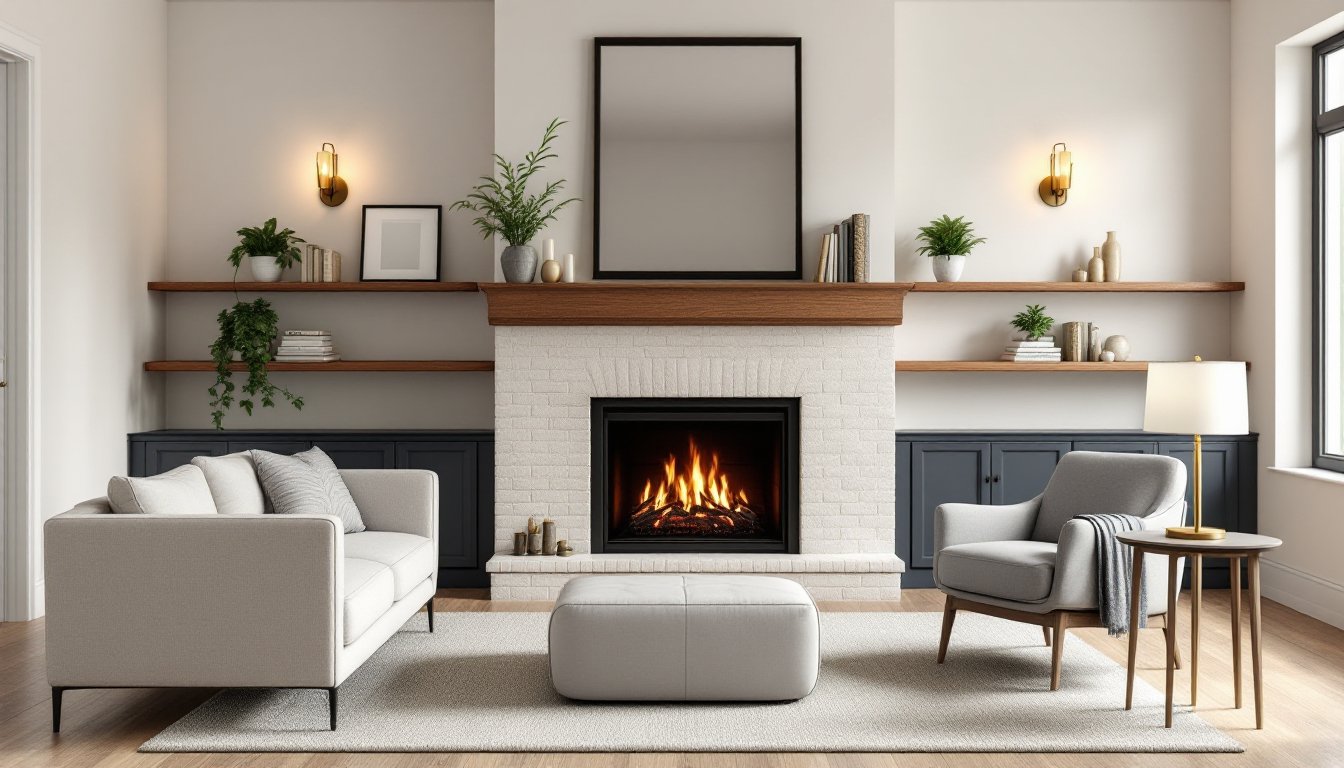
Your fireplace is already the focal point: the question is how you draw the eye to it intentionally. A mantel is prime real estate, keep it edited. Three to five carefully chosen objects (a mirror, candlesticks, a small plant) beat a cluttered lineup of fifteen things. Hang artwork above the mantel (a single large piece or a cohesive trio), but leave breathing room: art hung too close to the frame feels cramped.
Add a low bench or ottoman in front of the hearth if the fireplace is usable: it serves as bonus seating and creates a cozy zone. Flank the fireplace with built-in shelving or a pair of narrow console tables if the wall allows, this frames the opening and adds storage without eating floor space. Lighting matters: a wall sconce on either side of a fireplace amplifies the focal point and softens the room after dark. These aren’t optional decorative touches: they signal to the brain that this is where the room lives.
Using Scale and Proportion to Your Advantage
Small rooms don’t demand small furniture, they demand proportionate furniture. A low-profile sofa, slim-leg chairs, and streamlined tables create visual lightness. Avoid oversized sectionals, chunkily upholstered recliners, and tables with thick, ornate bases. A sleek, 8-foot sectional that floats reads as smaller than a squat 6-foot sofa pushed against the wall because proportion and negative space matter more than actual dimensions.
The fireplace itself is probably the largest visual anchor in the room. Use that to your advantage: pair it with artwork or a large mirror (36-48 inches) hung above to draw the eye upward and expand the space mentally. Tall curtains (floor-to-ceiling) on windows flank the fireplace, reinforcing vertical lines that make ceilings feel higher. A rug anchors the seating group and defines the zone: it should be large enough that at least the front legs of your sofa rest on it. A rug that’s too small or too far from the fireplace fragments the space visually.
Carpet color matters, too. A light, neutral rug (cream, soft gray, pale blue) visually extends the floor and recedes: a dark rug grounds the space but claims real estate. In a small room with fireplace, lean toward the lighter option unless you’re going for moody, intimate vibes. Test your color choices by placing a large piece of card stock on the floor and living with it for a day.
Storage and Multi-Functional Design Solutions
A small living room can’t afford storage that sits idle or furniture that does one job. Floating shelves flanking the fireplace hold books, plants, and décor while keeping floor space clear. A storage ottoman (24×24 or 24×36 inches) doubles as a coffee table and stash for throws, remotes, and magazines. A console table behind the sofa with drawers provides a surface for lamps while hiding clutter.
Built-in cabinets or shelving on the wall opposite the fireplace (if your walls allow) maximizes vertical space without the footprint of freestanding bookcases. Measure carefully: a 10-inch-deep floating shelf looks less imposing than a 14-inch unit that projects into the room. Open shelving invites visual clutter, so if you choose it, commit to editing regularly. Closed-back cabinets below and glass shelves above balance function and airiness.
Pick furniture with hidden storage, bed frames with drawers underneath, trunks that work as side tables or TV stands, nesting tables that stack when not needed. A TV stand with enclosed shelving hides electronics and cords: wall-mounting the TV frees the stand entirely. Every surface should have a purpose, and every piece should justify its footprint. This isn’t minimalism for its own sake: it’s practical respect for square footage.
Lighting, Color, and Visual Flow
Lighting shapes how small rooms feel. Ceiling fixtures alone cast harsh shadows around the fireplace: add layered light instead. Sconces on either side of the fireplace offer ambient warmth, table lamps near seating provide task lighting for reading, and a dimmer-controlled overhead fixture gives flexibility. String lights or a small chandelier (3-4 feet wide) hung opposite the fireplace bounces light and creates coziness without taking up floor space.
Color palettes in compact spaces should flow without harsh transitions. Paint the fireplace wall a warm neutral (cream, soft taupe, warm gray) that complements the surround and mantel materials, not fights them. Carrying similar tones across the room creates continuity: a bold accent wall in a small space compresses the room further. Textiles (throw pillows, a blanket on the sofa, curtains) introduce color and pattern, let them do the personality work rather than the walls. Resources like Apartment Therapy showcase edited color palettes and small-space layouts that prove restraint feels intentional, not sparse.
Sightlines matter: arrange furniture so you can see from the entry into the room and from the seating area toward the fireplace without visual clutter breaking the view. A clear path from door to seating to fireplace creates flow, even in 150 square feet. Mirrors hung on walls perpendicular to the fireplace (not facing it directly) bounce light and create depth. Design platforms like Houzz let you upload photos of your actual space and experiment with layouts and color before committing to changes.
Conclusion
A small living room with fireplace is a design constraint that, handled thoughtfully, becomes an asset. Your fireplace anchors the room, simplifies the layout decision, and gives you a genuine reason to gather. Measure first, choose proportionate furniture scaled to your walls, layer your lighting, and edit ruthlessly. This is a room designed for function and intimacy, not sprawl. When every piece earns its place and the fireplace glows in the center of it all, you’ve transformed a tight squeeze into a space that feels complete.