Your living room center table is often the first thing guests notice when they walk in, it deserves more than just clutter. Whether you’re working with a wood coffee table, glass top, or industrial base, the key to great living room center table decoration is balance. This guide walks you through seven practical styling strategies that work whether you’re furnishing a small apartment or a sprawling family room. You’ll learn how to layer elements, incorporate natural touches, and rotate seasonal decor without overwhelming your space. Let’s get your center table looking intentional and inviting.
Table of Contents
ToggleKey Takeaways
- A well-styled living room center table requires the right balance of base shape, size, and material—choose rectangular tables (36–48 inches) for standard rooms and square tables for tighter spaces.
- Layer your center table with 5–7 items maximum using varying heights, textures, and asymmetrical placement, keeping two-thirds of the surface empty to avoid a cluttered appearance.
- Incorporate low-growing plants and natural elements like stones, branches, or wooden bowls to add warmth and soften hard surfaces without obstructing sightlines.
- Combine beauty with function by using storage boxes, woven baskets, and decorative trays to hide everyday items while maintaining an intentional, curated look.
- Rotate seasonal decor throughout the year—deep colors and candles in winter, fresh flowers in spring, minimalist styling in summer, and warm tones in fall—to keep your living room feeling fresh without constant purchases.
Choose the Right Base: Table Shape, Size, and Material
Before you add a single decoration, assess what you’re working with. Table size matters: the ideal coffee table should be 12 to 18 inches from the sofa, leaving comfortable legroom and visual breathing room. A rectangular table 36–48 inches long works well for standard living rooms and provides linear display surface. Square tables (typically 36×36 to 48×48 inches) work better in tighter spaces and create a more intimate seating arrangement.
Material affects how you’ll decorate it. Solid wood absorbs weight and scratches with character: it pairs well with natural decor like stones, books, and plants. A glass top demands clean surfaces and shows fingerprints, so you’ll want fewer items and regular maintenance. Industrial bases (metal frames, cement, or mixed materials) lean toward minimalist styling, too much clutter looks chaotic on these tables.
Measure your actual space before buying. Account for storage underneath if you’ll use the shelf or lower tier. A table that leaves you only 6 inches of walking space becomes a stubbed-toe hazard, not a design feature.
Layer Your Elements for Visual Depth
The magic of center table styling isn’t one statement piece, it’s layering. Think of your table surface as a landscape with foreground, middle ground, and background.
Mix Heights and Textures
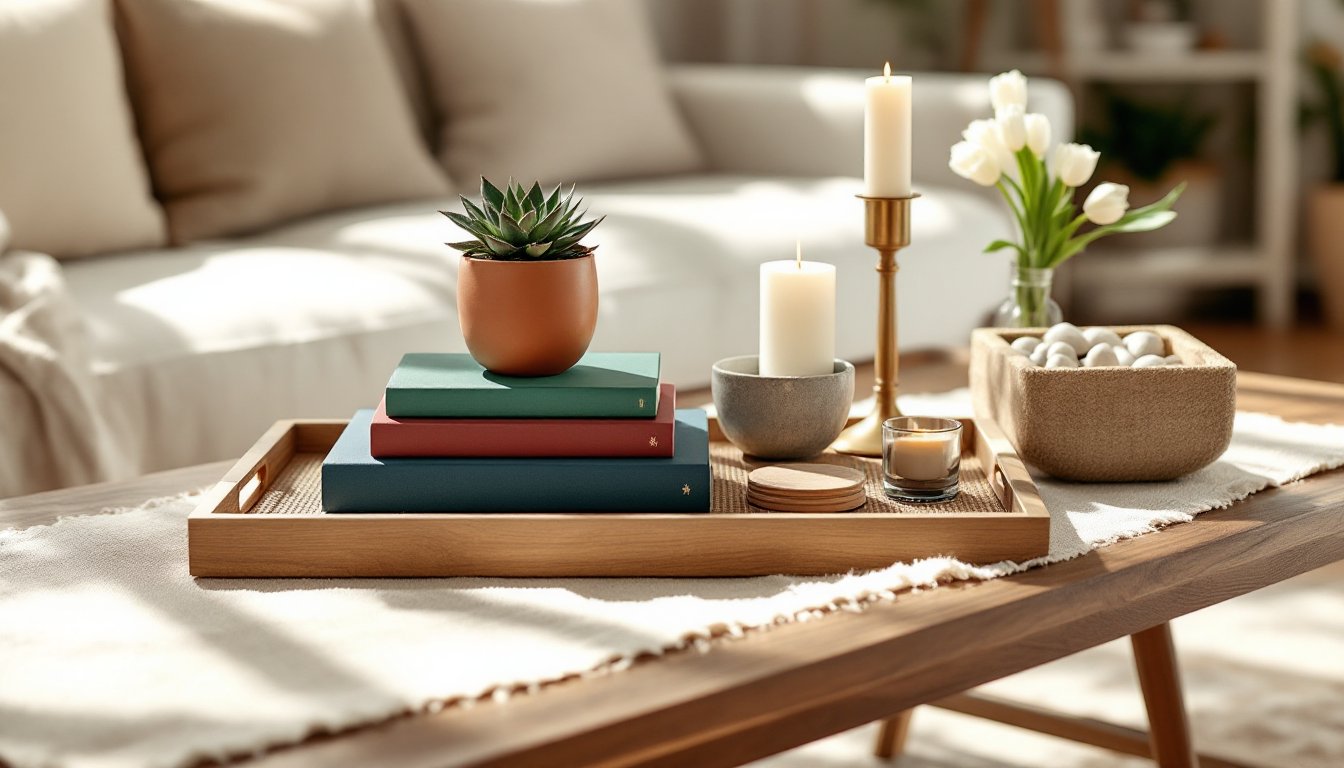
Start with a base layer: a wooden tray (12×18 inches is standard) or a low ceramic bowl anchors the display and contains smaller items. This prevents the scattered-items look that reads as accidental rather than designed.
Next, introduce height variation. A stack of 3–4 hardcover books (grouped by color or topic) creates vertical interest without taking up much real estate. Lay one flat, stand another upright, angle a third, asymmetry feels intentional. Top the stack with a small sculpture, candle, or plant pot.
Add textural contrast: smooth ceramic next to rough stone, matte finishes beside glass or brass accents. If you have a small flowering plant (orchid, succulent, or pothos), pot it in a contrasting material, glossy ceramic if your table is wood, or industrial concrete if you’re going modern.
Keep the dominant surface two-thirds empty. A crowded table reads as cluttered: empty space is part of the design. Aim for 5–7 items max across the entire surface, spread asymmetrically rather than centered.
Incorporate Plants and Natural Elements
Living plants add life (literally) to your center table and soften hard surfaces. A low-growing succulent or small ficus works best, tall plants obstruct sightlines and make conversation awkward.
Keep the plant pot intentional. A terra-cotta pot feels organic and pairs with wood tables: a matte ceramic vessel suits modern interiors. Ensure the pot has drainage and sits on a ceramic or cork coaster to protect the table surface from water rings.
Beyond plants, natural elements add warmth. A small wooden bowl filled with smooth river stones or decorative branches (dried or preserved) brings outdoor texture indoors. A stack of natural linen cocktail napkins or a woven table runner introduces softness and can hide wear on older tables.
Rotating elements seasonally, pinecones and candles in fall, fresh flowers in spring, keeps the display feeling alive without requiring a complete overhaul. This approach aligns with sustainable home decor practices that make use of what’s already in your space.
Add Functional Storage and Display
A beautiful center table should also work for you. Wooden boxes or woven baskets (10×10 inches, 4–6 inches tall) sit beneath or on the table surface and hide remotes, coasters, and magazines while maintaining the aesthetic.
A small tray with compartments (marble, wood, or brass) holds everyday items, phone chargers, pens, notepads, in an organized, visible way. This prevents the “junk drawer” vibe while keeping essentials at hand.
Books stacked horizontally serve double duty: they’re functional (readable) and decorative. Choose titles with attractive spines or stack them with the cover facing forward to add color. A coffee table book about design, travel, or art (typical dimensions 10×12 inches) becomes both conversation starter and visual anchor.
Drawer-style coffee tables are game-changers if your budget allows, they store items out of sight while keeping your display space clutter-free. If you’re renting or can’t replace the table, decorative boxes or woven storage baskets accomplish the same function at less cost.
Style with Seasonal and Rotating Decor
Your center table shouldn’t look the same year-round. Seasonal styling keeps your living room feeling fresh and gives you a reason to reassess what works.
Winter: Introduce deep colors (navy, burgundy, forest green) through candles, books, and a small evergreen arrangement. A brass or copper candlestick with a thick white candle anchors the display and adds warmth.
Spring: Swap in fresh flowers (tulips, peonies, or cherry branches) and lighter materials, pastels, white ceramics, and pale linens. Keep plants thriving by watering on a schedule and deadheading spent blooms.
Summer: Minimize items to create visual lightness. A single clear glass vase with fresh cut flowers, one style book, and a small plant suffice. Keep surfaces mostly open, clutter feels heavier in warm months.
Fall: Layer textures with burnt orange, cream, and brown tones. Add a wooden candle holder, dried branches, and small gourds or pumpkins (real or ceramic).
Rotating decor doesn’t mean buying new items constantly. Swap what you already own between rooms, the sculpture from the bedroom shelf, the candlestick from the kitchen. Many home decor inspirations come from rearranging pieces you already have. This practice also keeps styling intentional rather than impulse-driven.
Conclusion
A well-styled living room center table balances beauty with function. Start with the right table for your space, layer elements with intention, add natural touches, incorporate storage, and refresh seasonally. The result is a display that looks polished and reflects modern home design trends without feeling overstuffed or overly precious. Your center table should invite people to use it, for drinks, books, or simply as the visual anchor of your living room.