A long narrow living room presents a distinct challenge, especially when you need to fit a TV, seating, and traffic flow into a space that feels more hallway than sanctuary. The temptation is to push everything against the walls, but that usually makes the room feel even more cramped and awkward. The good news is that with thoughtful planning and smart layout choices, you can transform that awkward floor plan into a functional, inviting space. Whether you’re working with a narrow living room layout with TV as your centerpiece or simply want to maximize a tight footprint, the strategies below will help you design a room that actually works for how you live.
Table of Contents
ToggleKey Takeaways
- Measure your space and create a floor plan before arranging furniture to avoid costly mistakes and ensure proper TV viewing distance of 1.5 to 2.5 times the diagonal screen size.
- A floating furniture layout pulls your sofa away from walls with 2–3 feet of breathing room, which actually makes a long narrow living room layout with TV feel larger and more intentional.
- Wall-mounting your TV on the long wall frees up floor space, creates a focal point, and should be centered 42–48 inches from the floor at eye level for comfortable viewing.
- Divide the room into two distinct zones using visual separators like bookshelves or rugs to prevent a stretched feel and create multiple functional areas.
- Layer your lighting with ambient, task, and accent fixtures at varying heights throughout the room, and use mirrors and vertical elements like tall bookcases to counteract the narrow, boxy feeling.
- Choose an L-shaped sectional 80–100 inches long with a low profile (arms under 30 inches), and keep walkways at least 24–30 inches wide by staggering furniture placement rather than lining pieces in a row.
Assess Your Space Before Arranging
Before moving a single piece of furniture, measure everything. Grab a tape measure and document the room’s length, width, and ceiling height. Note the locations of windows, doors, electrical outlets, HVAC vents, and baseboards. These fixed elements dictate your options.
Sketch a basic floor plan on paper or use a free online tool, this saves you from rearranging furniture repeatedly. Measure your TV, sofa, and other large pieces, then mark them to scale on your plan. This simple step prevents costly mistakes.
Also consider the distance from your seating to the TV. The ideal viewing distance is roughly 1.5 to 2.5 times the diagonal screen size. If you have a 55-inch TV, aim for seating 7 to 12 feet away. In a narrow room, that distance often dictates where both the sofa and TV can realistically go.
Finally, identify traffic patterns. Where do people naturally walk through the room? You’ll want to keep that path clear to avoid a congested, obstacle-filled feel.
Floating Furniture Layout for Maximum Flexibility
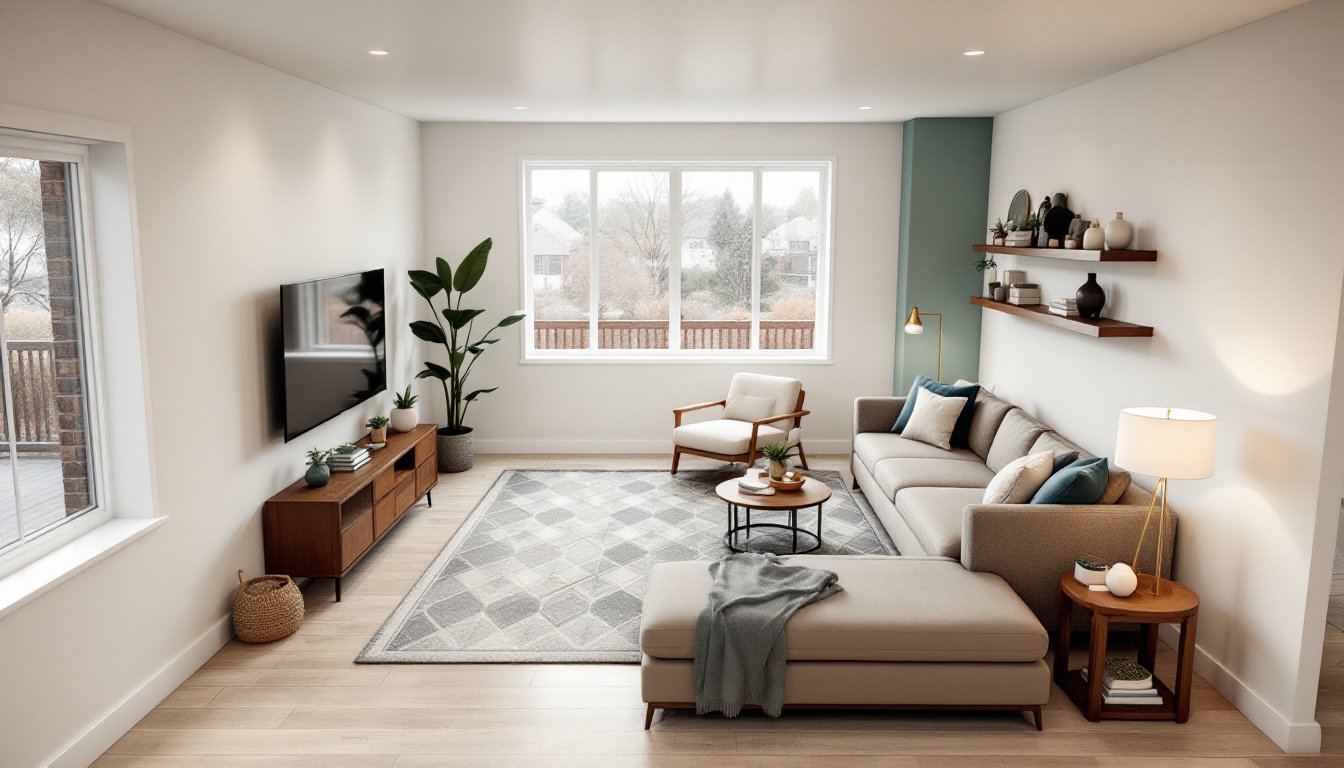
Resist the urge to push the sofa against the wall. A floating layout, where furniture sits away from walls, actually makes narrow rooms feel larger and more intentional. It creates definition and breaks the hallway effect.
Start by pulling your sofa into the room, roughly parallel to the TV wall. Leave at least 2 to 3 feet behind it: this breathing room prevents the space from feeling boxed in. Add a low console table or bookshelf behind the sofa if you want to define the zone further without blocking sightlines.
Place accent chairs or a second seating piece perpendicular or at an angle to the sofa. This arrangement encourages conversation and softens the linear feel of the room. Angle chairs slightly toward each other and the TV, not just staring straight ahead.
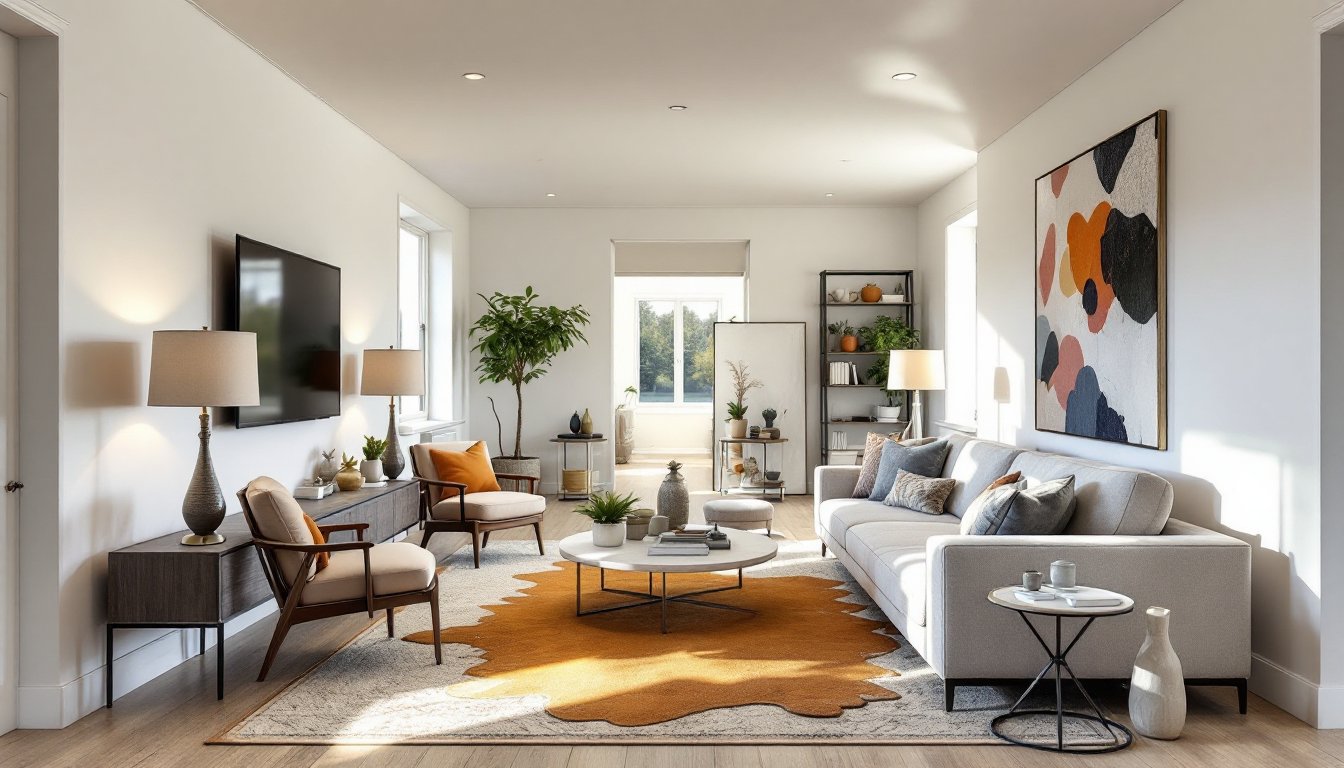
Use a rug to anchor the seating group. A rug roughly 8 feet by 10 feet (or even 6 by 9 feet in tighter spaces) helps visually unite furniture and makes the seating zone cohesive. The rug should be large enough that at least the front legs of seating pieces sit on it.
Floating works because it communicates intentionality: you’re not just cramming stuff into corners, you’re designing a functional living zone. This approach also leaves wall space for storage, artwork, or shelving, all useful in narrow footprints.
Wall-Mounted TV Placement Options
For a long narrow living room layout with TV, wall-mounting frees up floor space and eliminates the footprint of a TV stand. A wall-mounted bracket (full-motion or tilting) costs $40 to $200 depending on quality and weight capacity: it’s a worthwhile investment.
Mounting the TV on the long wall (parallel to the room’s length) is often best for narrow spaces. It creates a focal point and lets seating angle naturally toward it. Use a stud finder to locate wall studs, your mount must anchor into studs (or into a mounting block between studs) every 16 inches on center. Never rely on drywall anchors alone for heavy TVs.
Alternatively, if the room layout allows, mounting on a short wall (the end of the room) can work, but you may sacrifice viewing angles from some seating. Test sight lines before drilling.
Height matters too. Center the screen at eye level when seated, typically 42 to 48 inches from the floor to the screen center. Too high causes neck strain: too low feels cramped.
Conceal cables with a wire raceway (a plastic channel mounted to the wall below the TV, $15–$40). Running cables through walls requires care to avoid electrical lines and plumbing, hire a licensed electrician if you’re unsure. Before mounting anything, use home design inspiration from industry leaders to visualize your final TV wall setup, including any shelving or accent elements.
Create Intimate Seating Zones
In a long narrow space, dividing the room into two distinct zones prevents a stretched, uncomfortable feel. One zone anchors the TV: the second might host conversation, reading, or a game table.
Use visual separators like a low bookshelf, a console table, or even a change in flooring (a rug, or different finishes) to mark the boundary between zones without walls. This maintains sightlines while creating intimacy.
Zone one (TV viewing): position your primary seating here, typically a sofa and one or two accent chairs angled toward the screen.
Zone two (secondary use): place a smaller grouping further down the room. Maybe two chairs and a side table for conversation, or a reading nook by a window. This gives the space multiple functions and makes both zones feel intentional rather than one being an awkward overflow area.
The distance between zones should be at least 3 to 4 feet, enough to feel separate but not so distant that the room fragments. People in each zone should be able to hear conversation, suggesting the zones coexist rather than isolate.
Sectional Sofas for Narrow Spaces
A sectional sofa can work brilliantly in a narrow living room if sized correctly. An L-shaped sectional (not a sprawling 3-piece) anchors a zone without consuming the entire room. Look for models 80 to 100 inches long, not oversized 140-inch behemoths.
When choosing a sectional, confirm the chaise or short side fits your room’s proportions. Measure the exact dimensions before buying, sectionals are hard to return and harder to maneuver through doorways. Some retailers offer modular sections you can reconfigure, offering flexibility.
A sectional with a low profile (arm height under 30 inches, seatback 32 to 36 inches) feels lighter and won’t dominate a narrow room. Pair it with one accent chair or small side table to avoid the TV-facing wall feeling monotonous.
Optimize Traffic Flow and Walkways
A hallway-like room needs clear pathways, or it’ll feel cramped and awkward. Aim for walkways at least 24 to 30 inches wide, enough for one person to move comfortably, or two to pass each other. More is better if space allows.
Identify your main traffic routes: entry to kitchen, entry to hallway, entry to bedroom, etc. Keep those paths unobstructed. Tuck occasional tables, side chairs, and accent pieces to the edges of these routes, not across them.
Stagger furniture placement rather than lining everything in a row. If your sofa runs parallel to one wall, angle an accent chair slightly into the room or offset it slightly along the wall. This breaks up linear monotony and improves sightlines.
Avoid cluster-heavy arrangements in the center of the room. Instead, use practical small space living strategies to organize your layout for both beauty and function. Keep the center of the room relatively open, using rugs and floating zones to define areas without barricading them.
Consider moving less-used pieces (a console, bookshelf, or display table) to the ends of the room or tall narrow walls. These pieces add character and storage without eating into your main living area.
Lighting and Decor Tips for Long Rooms
Lighting is a game-changer in a long narrow room. A single ceiling fixture won’t cut it, the far end of the room will feel dark and disconnected. Layer your lighting:
- Ambient: A ceiling fixture or flush-mount provides baseline illumination.
- Task: Table lamps on side tables, reading lights near seating, or a floor lamp in a corner.
- Accent: Wall sconces, picture lights, or backlighting behind shelves add depth and visual interest.
Place lamps at different heights and positions throughout the room. This creates visual rhythm and makes the entire space feel cohesive rather than one dark area trailing off.
For decor, mirrors are your friend. A large mirror on one of the long walls reflects light and makes the space feel wider. Lean it against the wall or hang it: avoid mounting directly opposite a window (glare) or facing the TV (reflection annoys viewers).
Verticality matters in narrow spaces. Use tall bookcases, floor-to-ceiling shelving, or wall-mounted art to draw the eye upward. This counteracts the stretched, boxy feeling and makes ceilings feel higher. Design inspiration from top home resources shows how vertical elements can transform narrow layouts.
Keep the color palette relatively consistent throughout the room. A single wall color from entry to far end makes the space feel unified, not disjointed. Add accent colors through art, throw pillows, or a rug, these inject personality without overwhelming the narrow footprint.
Avoid heavy, dark furniture when possible. Light-colored or transparent pieces (glass tables, open shelving) feel less weighty. This is especially true if you’re using a lot of seating in a compact zone.