A navy blue couch is more than furniture, it’s a foundation. Unlike trendy pastels or stark black, navy holds its own for years, pairing quietly with almost anything while commanding the room with understated confidence. Whether you’re starting fresh or redesigning around an existing piece, figuring out how to style a navy couch living room means thinking through color, walls, layout, and layers. This guide walks you through practical, tested approaches to make that couch the best-dressed focal point in your home.
Table of Contents
ToggleKey Takeaways
- A navy blue couch living room requires thoughtful color palettes—choose warm neutrals for a safe, spacious feel or deep jewel tones for drama and sophistication.
- Accent walls behind the couch or opposite to it are the most strategic design choice, amplifying the navy couch as a focal point without overwhelming the entire room.
- Layered lighting with warm-toned ambient, task, and accent light is essential since navy absorbs light and benefits from dimmable fixtures at 3000K or warmer to avoid a flat, dingy appearance.
- A proportional coffee table and substantial 8×10+ area rug anchor the seating area, while floating furniture creates intentional zones that make smaller living rooms feel larger.
- Textiles—throw pillows, blankets, and curtains in varied textures and complementary colors—transform a navy couch from furniture into a curated design moment and prevent the space from feeling monotonous.
Color Palettes That Complement Navy Blue
Navy pairs with more color combos than you’d think, and the palette you choose sets the mood for the entire room. The trick is deciding whether you want contrast, drama, or harmony.
Create Contrast With Warm Neutrals
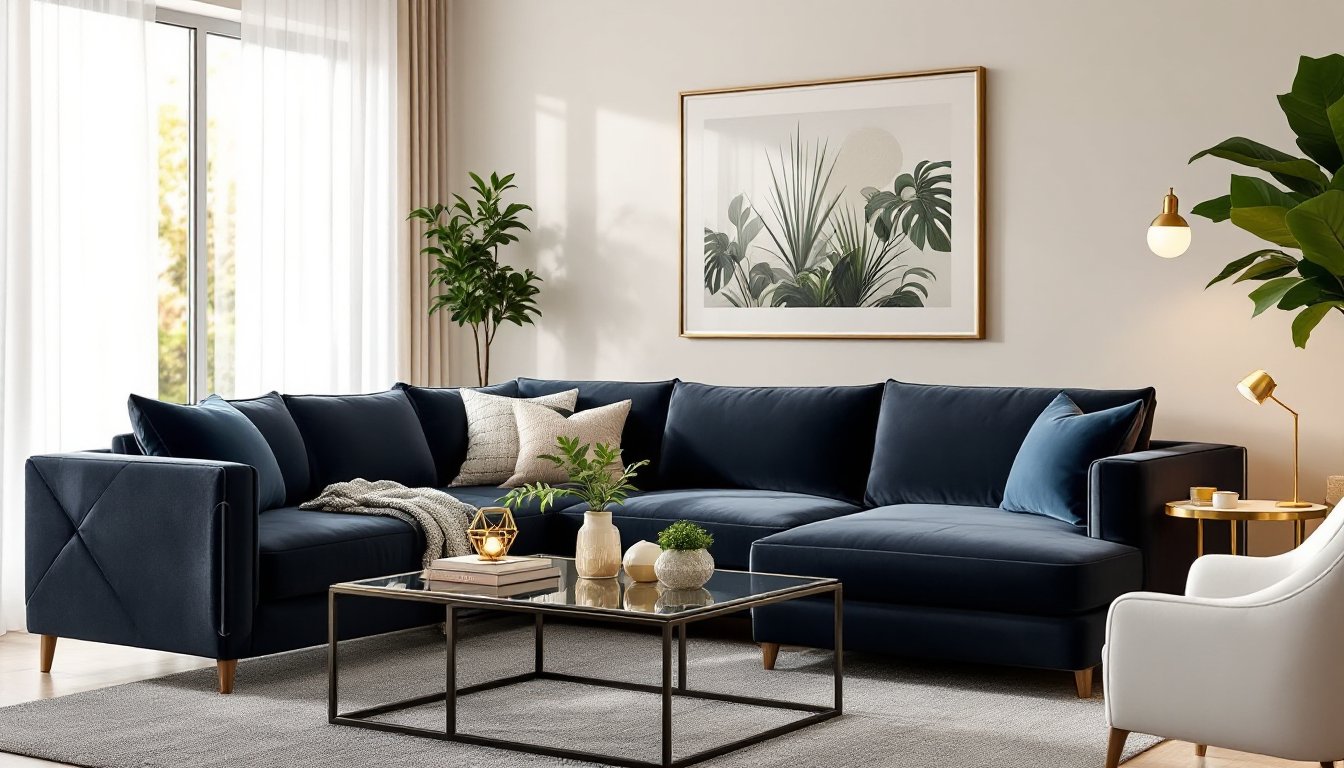
Warm neutrals, creams, taupes, soft grays, and warm whites, let navy breathe. This is the safest, most livable approach: paint walls in a soft cream or warm white (not stark white), add a beige area rug, and keep trim and doors neutral. The navy couch becomes a bold anchor without overwhelming the space. Think of it like a well-tailored navy blazer against a cream shirt, simple, professional, and endlessly flexible. You can swap out pillows, throws, and accessories seasonally without fighting your backdrop. Gold or brass accents (picture frames, lamp bases, side table legs) warm up the palette and add richness. This combination works especially well in smaller living rooms, where you want the space to feel larger and less closed-in.
If you lean into warm neutrals, consider a warm gray (with slight tan or brown undertones, not purple-gray) for accent walls or built-ins. Warm white trim work, not the bright white of primer, keeps everything cohesive. Add soft textures: a jute rug, linen curtains, or cotton throws to avoid a cold, sterile feel.
Go Moody With Deep Jewel Tones
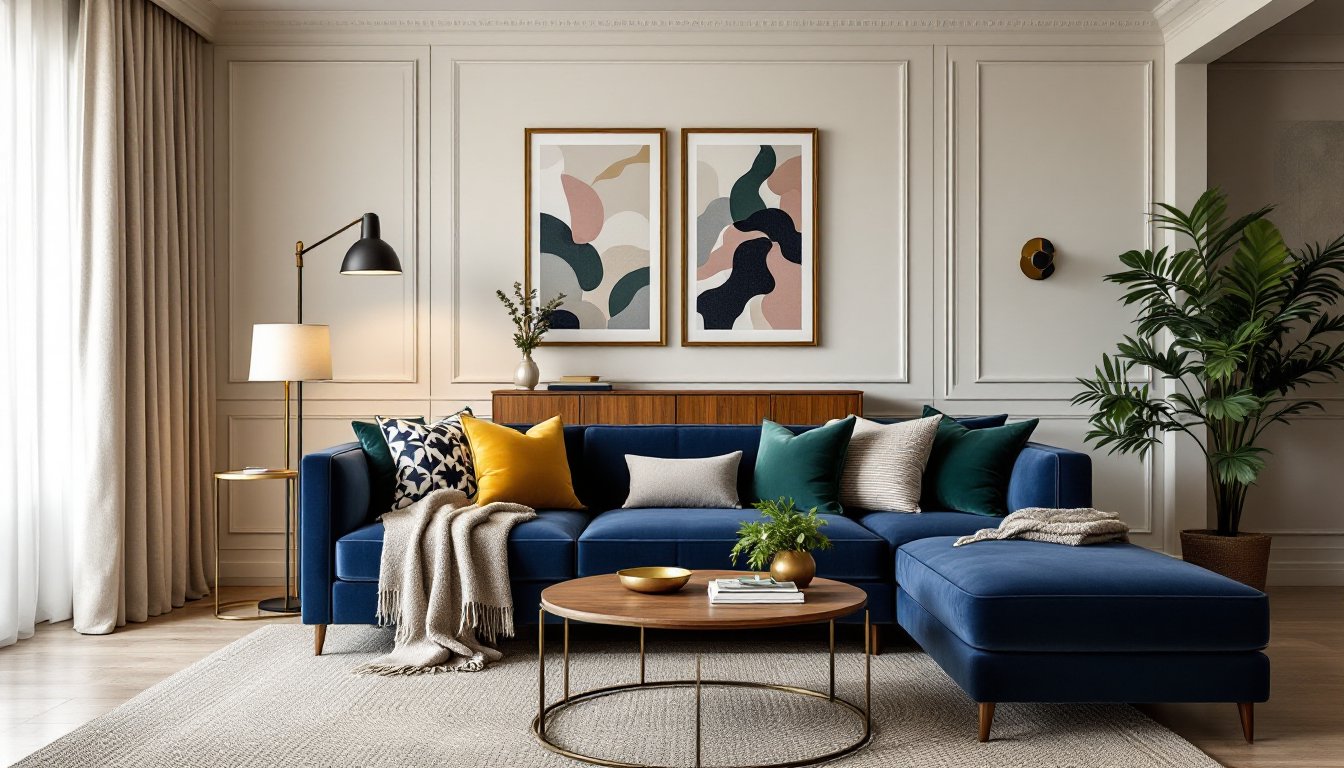
Don’t want safe? Layer navy with emerald, sapphire, or deep teal. This approach creates a rich, hotel-lobby vibe that photographs beautifully. Paint an accent wall in deep forest green or teal, add jewel-toned velvet or silk pillows, and pull in burgundy or plum accents through artwork or throws. The navy couch anchors the drama, it’s bold enough to hold its own against other jewel tones. According to design trends featured on MyDomaine, this moody palette approach has staying power because the colors are inherently sophisticated and work well with natural wood, leather, and metallic finishes.
Dark wood furniture and gold metallics amplify the luxury feel. Pair this palette with softer lighting (warm dimmers, candles, brass fixtures) to prevent the room from feeling cave-like. A lighter ceiling (off-white, soft gray) helps bounce light down and keeps the moody walls from pressing inward.
Accent Wall Treatments and Paint Ideas
One or two accent walls can anchor a navy couch living room without the commitment of a full-room repaint. Here’s where to think strategically.
The wall behind or adjacent to the couch is the most obvious choice, it frames the furniture and pulls focus. If your navy couch sits against a wall, painting that wall a contrasting color (soft white, warm gray, or a jewel tone) makes the couch pop. The wall becomes part of the couch’s visual presence rather than competing with it. Alternatively, paint the wall the same navy as the couch for a streamlined, cohesive look that reads as intentional rather than accidental.
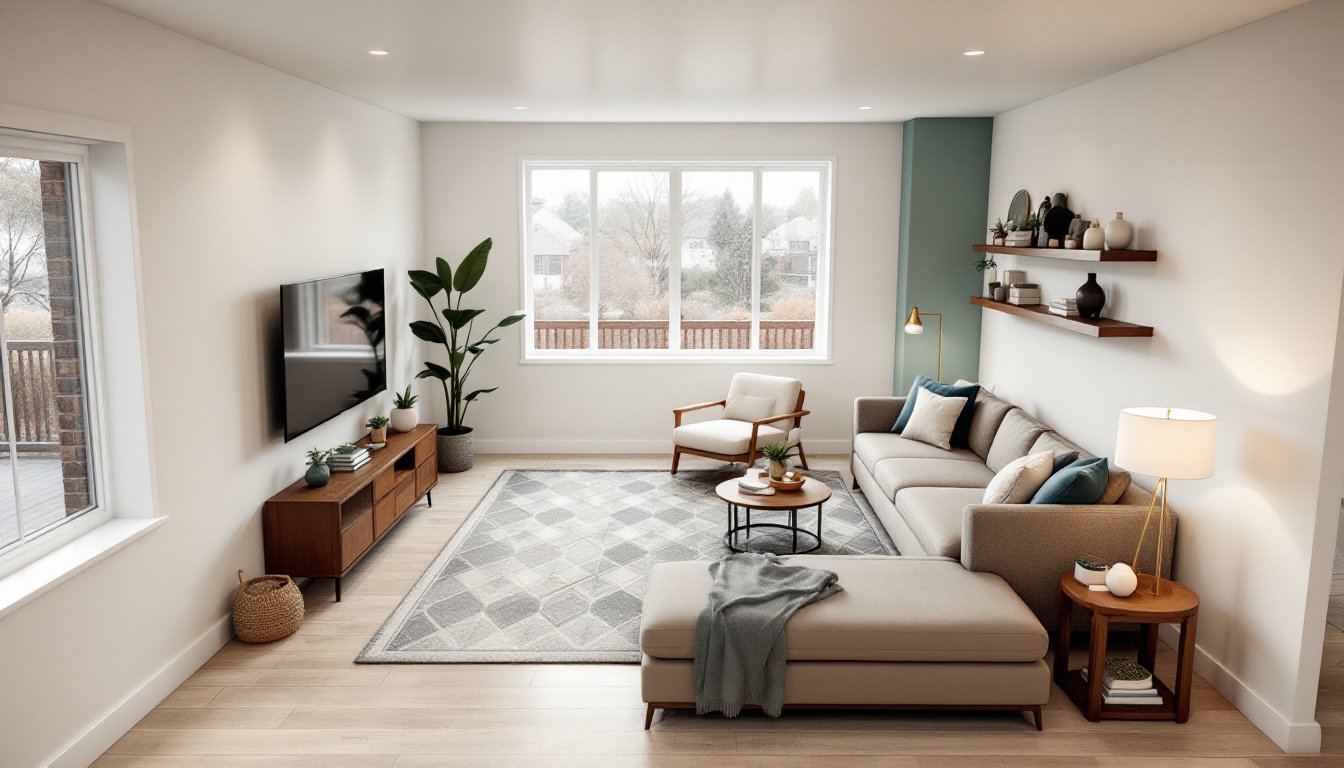
If you prefer subtle drama, an accent wall perpendicular to the couch, say, the wall with a window or fireplace, draws the eye without overwhelming. A deep teal, forest green, or warm taupe accent wall opposite the couch creates visual balance and gives the space depth. Light in the room will change how that accent color reads throughout the day, so always test paint samples in your specific room before committing. Paint exposure for 2–3 days under natural light at different times to see undertones shift.
For textured interest without a full repaint, consider a shiplap, beadboard, or paneled treatment on one wall. This adds architectural detail and pairs beautifully with navy upholstery. Shiplap painted in soft white or warm gray becomes a subtle, farmhouse-leaning backdrop. If you’re handy, a DIY shiplap install isn’t overly complicated: measure the wall, cut boards to length (1×6 or 1×8 tongue-and-groove boards work well), and fasten them with a nail gun or brad nailer over a primer coat of paint. Always account for outlets and switches before measuring. This is a moderate project, not structural work, but does require patience and a level to keep rows straight.
Styling Your Furniture Layout for Maximum Impact
A navy couch claims space. Smart layout makes it work harder.
If your couch is a sectional or oversized piece, anchor it with a proportional coffee table, glass, wood, or metal in a style that matches your overall aesthetic. Too-small tables look timid. Too-large tables crowd the room. A wood table in warm walnut or rich chocolate tones complements navy beautifully and grounds the seating area without competing. Pair it with a substantial area rug (8×10 or larger in most living rooms) that sits partially under the couch and pulls the seating group together visually. Neutral rugs (cream, soft gray, taupe, or natural jute) keep the navy couch as the star: patterned rugs should include navy or complementary colors without overwhelming the base.
Floating furniture, pulling the couch away from the wall, facing seating across from it, creates intimacy and makes smaller spaces feel intentional rather than cramped. This works if you have depth: in skinny living rooms, floating reads as awkward. Flank the couch with side tables (wood, metal, or marble, consistency in material helps) and add a floor lamp beside each for task lighting and balance. Symmetry around the couch (identical lamps, matching side tables) feels formal: asymmetry (one wood table, one metal: different lamp styles) feels lived-in and modern.
Research from Homedit on furniture arrangement shows that angling pieces slightly away from walls and creating zones (a reading nook in the corner, a conversation area facing the TV) makes living rooms feel larger and more functional. With a navy couch as your anchor, you can afford to experiment with the supporting pieces.
Lighting Solutions to Enhance Your Navy Couch
Navy absorbs light. Poor lighting makes a navy couch look flat and heavy: good lighting makes it glow with depth. Layer three types of light: ambient, task, and accent.
Ambient light (ceiling fixtures, recessed lights) should be warm-toned and dimmable, 3000K color temperature or warmer feels inviting rather than institutional. If your living room lacks existing overhead, consider adding recessed lights or a pendant fixture. Install dimmers on all light switches so you can adjust intensity throughout the day and evening. Navy shows well under warm, adjustable light but looks dingy under cool white or fluorescent bulbs.
Task lighting, floor lamps beside the couch, table lamps on side tables, lets people read without straining. Choose fixtures in materials that complement your palette: brass or gold for warmth, matte black or wood for modern, bronze for transitional. Position lamps so light spreads across the couch without glare on a TV screen (if that’s relevant to your layout).
Accent lighting, picture lights above artwork, uplighting behind floating shelves, or candles on a side table, adds dimension and makes the navy couch feel like part of a curated, intentional space rather than just a place to sit. Wall sconces flanking a mirror or artwork add depth and reduce reliance on overhead fixtures. A navy living room with layered, warm lighting reads as a destination, not a dark cave.
If your couch is near a window, dress it with blackout or room-darkening curtains in a neutral color or soft pattern to control light and prevent glare on upholstery. UV-blocking lining protects navy fabric from fading over time, a worthwhile investment for a statement piece.
Textiles, Throw Pillows, and Layering Techniques
This is where personality happens. Throw pillows, blankets, and area rugs transform a navy couch from furniture into a design moment.
Pillows are your easiest update. Mix textures and colors: pair solid navy or white pillows with patterned ones (stripes, geometric prints, or subtle florals in cream, gold, or jewel tones). Vary sizes, a 24″ square pillow, 18″ pillows, and lumbar rectangles create visual interest and actual comfort. Opt for quality covers you can remove and wash: velvet, linen, cotton, or silk each read differently and age distinctly. A velvet pillow in sage green or emerald looks luxurious next to a chunky knit in cream. Leather or faux-leather accents (a small pillow or two) add edge and durability.
Blankets and throws soften the couch and invite use. Drape a linen, cotton, or chunky knit throw over the arm or back in cream, warm white, gray, or a subtle pattern. Weighted blankets aren’t just functional, a linen throw in natural or cream tones adds texture and signals comfort. Layer multiple throws at different scales for depth.
According to blue living room decorating ideas, textiles and layering are key to preventing an all-navy scheme from feeling monotonous. The article showcases rooms where varied textures, smooth silk, chunky wool, soft linen, create visual movement even within a single color family.
Curtains are textiles too. Sheer white or cream curtains diffuse light softly: heavier linen or velvet curtains in neutral tones frame windows and add substance. If your navy couch is bold, keep curtains subtle. If your walls are already textured or patterned, let curtains be quiet.
Undertake styling in layers: start with the couch and rug as your base, add pillows, then blankets, then wall art and accessories. Step back frequently. A navy couch requires intentionality, too many competing patterns or colors dilute its impact: too-sparse styling makes it look lonely. Find the balance through trial and adjustment. Rearrange pillows, swap throws, and test new accessories before committing to permanent changes.