Choosing floor tiles for your living room goes beyond picking what looks nice, it’s about blending durability, maintenance, and style into a space where your family actually lives. Whether you’re refreshing tired carpet, replacing old vinyl, or building from scratch, tile flooring ideas for living rooms have evolved dramatically, offering homeowners the flexibility to go bold or understated. Modern tile options range from oversized contemporary formats to authentic wood-look finishes that fool the eye, all while delivering the practical benefits tile brings: easy cleanup, longevity, and ageless appeal. In 2026, the trend isn’t about following one “Instagram aesthetic”, it’s about selecting tile that suits your home’s personality and your lifestyle. This guide walks you through seven proven design approaches, what to expect from each, and how to pick the right fit for your space.
Table of Contents
ToggleKey Takeaways
- Floor tiles for living rooms combine durability, low maintenance, and style while offering modern options from oversized contemporary formats to authentic wood-look finishes.
- Large-format tiles (24×48″ or 36×36″) create a seamless, gallery-like aesthetic with fewer grout lines, but require a perfectly flat subfloor within ⅛ inch over 10 feet to prevent cracking.
- Wood-look porcelain tiles deliver the warmth and grain of hardwood without water sensitivity or refinishing, using high-resolution digital printing for authentic appearance.
- Patterned and decorative tiles add personality and age gracefully, from geometric Moroccan designs to terrazzo and speckled finishes that mask dirt and footprints.
- Neutral ceramic tiles in soft beiges, grays, and creams provide a versatile canvas for any decor, with matte and textured finishes offering better grip and residential appeal than high-gloss.
- Stone-effect tiles replicate slate, limestone, and granite without the maintenance burden or cracking risk, and should be sealed after installation using a penetrating sealer for optimal longevity.
Contemporary Large-Format Tiles For A Modern Minimalist Look
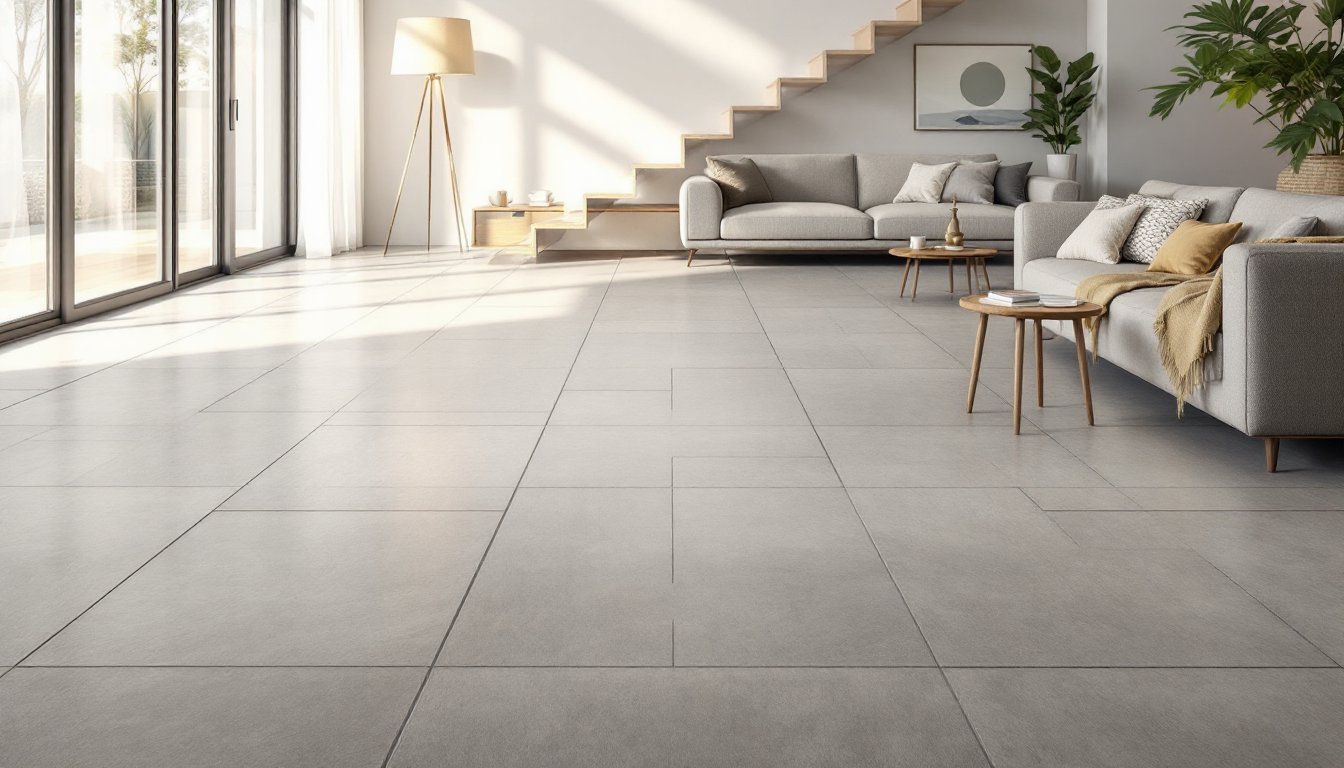
Large-format tiles, typically 24×48 inches or 36×36 inches, have become the go-to choice for homeowners chasing a clean, gallery-like aesthetic. These oversized planks minimize grout lines, creating an almost seamless visual flow that makes a living room feel larger and more composed. They work especially well in open-concept homes where the eye travels across multiple zones.
The practical upside: fewer grout joints mean less dirt traps and simpler maintenance. The tradeoff is installation finesse. Large tiles demand a perfectly flat subfloor: any dips or high spots will cause them to rock or crack under foot traffic. If your subfloor isn’t within ⅛ inch over 10 feet, you’ll need to level it first, a job worth hiring out if you’re unsure. Light grays, cool whites, and soft blacks dominate this category. Many come in polished, matte, or textured finishes: matte and textured are safer for living rooms since polished tiles can be slippery and show footprints like glass. Installation typically requires modified thin-set mortar and spacers to maintain consistency across those wide spans.
Warm Wood-Look Tiles That Blend Comfort With Easy Maintenance
Wood-look porcelain tiles capture the warmth and grain character of hardwood without the water sensitivity or refinishing headaches. Modern versions are genuinely convincing, manufacturers use high-resolution digital printing to replicate authentic wood tones and texture. You get authentic feeling underfoot while sidestepping the humidity swelling, pet scratches, and moisture damage real wood demands.
These tiles come in planks sized like actual hardwood boards: ⅝ inch to 1 inch thick, 5–7 inches wide, and 24–48 inches long. Warm honey, medium brown, and weathered gray-oak finishes dominate the market. They pair beautifully with neutral walls and natural light, making living rooms feel inviting without trying too hard. Installation is straightforward for DIYers with tile experience, standard thin-set mortar works fine. One heads-up: wood-look tiles are slippery when wet, especially in matte finishes. In a living room, that’s rarely an issue, but it’s worth noting if the space adjoins a kitchen or entryway where spills happen. Grout color choice matters here: light grout makes the tile grain the star, while dark grout emphasizes individual planks. Many homeowners use sanded grout for this application because it resists staining better and fills larger gaps if plank widths vary slightly.
Patterned And Decorative Tiles For Bold Visual Interest
If you want your living room floor to say something, patterned tiles deliver personality with staying power. Unlike paint or wallpaper, tile patterns age gracefully and won’t feel dated in five years if chosen thoughtfully. The key is restraint: go bold on the floor, keep walls and furnishings quieter, or vice versa.
Geometric And Moroccan-Inspired Patterns
Geometric and Moroccan-style tiles bring rhythm and movement to a floor without overwhelming the space. Think repeating stars, interlocking shapes, and hand-painted–look designs. Many of these come from Spanish, Portuguese, and North African traditions, lending authenticity and craft. You’ll find them in 8×8-inch to 12×12-inch formats, which are still manageable for DIY installation. The color palette typically features jewel tones (terracotta, indigo, forest green) or classic black and white. Lay them in a regular grid or offset pattern: an offset pattern creates visual energy. One practical note: highly decorated tiles sometimes sacrifice slip resistance. Check the coefficient of friction (COF) rating, aim for 0.60 or higher for living room floors where water exposure is minimal. Installation is standard, but measure twice and do a dry layout before mortar goes down: misalignment shows.
Terrazzo And Speckled Finishes For Texture
Terrazzo, a composite of marble, quartz, and cement chips set in a binder, delivers visual texture and sophistication without fussy patterns. Modern terrazzo tiles come in soft creams, warm grays, and dusty blues flecked with brass, copper, or mother-of-pearl accents. They catch light beautifully and feel more elevated than solid colors. Speckled finishes mimic this effect on ceramic or porcelain substrates, offering a similar aesthetic at a lower price point and with simpler maintenance. Both terrazzo and speckled tiles mask dirt and footprints well, making them practical for living rooms where life happens. Installation is straightforward, standard thin-set and grout work fine. Sealing isn’t always needed on modern porcelain versions, but true terrazzo tiles benefit from an impregnating sealer to protect against staining.
Neutral Ceramic Tiles That Work With Any Decor Scheme
Sometimes the smartest choice is staying neutral. Soft beiges, warm grays, pale creams, and cool whites form the backbone of tile living rooms that don’t shout but whisper elegance. Ceramic tiles in these tones are widely available, affordable, and forgiving, you can swap artwork, rugs, and furnishings without the floor feeling out of step. They’re the vanilla that never goes stale.
Neutral tiles shine in 12×12-inch, 18×18-inch, or 24×24-inch formats. Matte and textured finishes feel softer and more residential than high-gloss: texture also improves grip underfoot. The real flexibility here is in grout color: light grout reads minimalist and spacious, dark grout adds definition and hides dirt. Many DIYers opt for natural stone–look ceramic in neutral tones, they capture the subtlety of limestone or concrete without the maintenance burden. One consideration: lighter tiles and grout show dust and footprints. If that bothers you, a mid-tone gray ceramic tile masks everyday wear better. According to interior design resources on Homedit, neutral flooring creates a canvas where other design elements, wall color, lighting, and furniture, become the focal point. This approach works especially well in smaller living rooms where bold flooring might feel confining.
Stone-Effect And Natural Finishes For Elevated Aesthetics
Stone-effect tiles mimic slate, limestone, travertine, and granite without the price tag, sealing requirements, or risk of cracking. Modern porcelain stone-effect options are convincing enough that most visitors won’t notice the difference. They feel luxurious and lend living rooms an upscale, curated appearance.
These tiles come in varied sizes, 16×16 inches, 18×36 inches, and larger formats are common, and often with slight color and size variation (intentional from the manufacturer to mimic natural stone inconsistency). Textures range from tumbled (soft, aged) to honed (smooth, matte) to filled and polished (formal, reflective). Soft golds, cool grays, and warm browns dominate. Many homeowners combine stone-effect tile with large-format contemporary tiles in a space for visual interest without chaos. Installation demands attention to layout planning, especially if tiles vary in size. Dry-lay your pattern beforehand and number pieces with tape on the back so reassembly is intuitive. HGTV renovation shows frequently feature stone-look tile in high-end kitchen and living space renovations because it pairs well with natural light and open floor plans. Grout color is crucial here: match the predominant tile tone for a cohesive, natural look, or contrast slightly for a more contemporary grid-visible aesthetic. Avoid very light grout with darker stone-effect tiles: the contrast can read harsh. Seal after installation using a penetrating sealer rated for your specific tile type: most porcelain versions resist staining well, but sealing extends longevity and simplifies future cleaning.